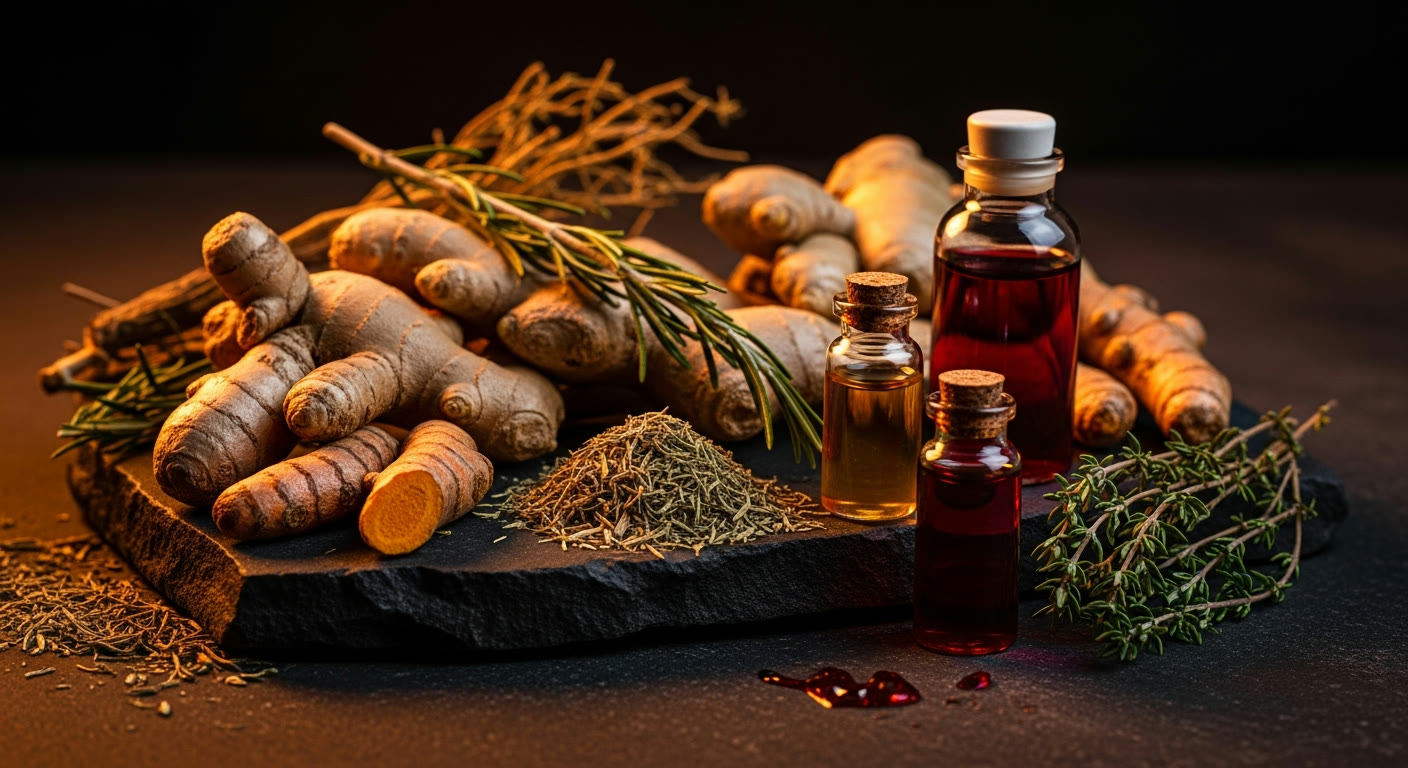
Long before “adaptogen” showed up on a smoothie menu, it was just what was in the cabinet. Ashwagandha in the tea tin. Ginger root by the stove. These weren’t trends — they were inheritance, passed down the way a recipe or a proverb gets passed down: hand to hand, without much explanation needed, because everyone already knew what it was for.
Here are five that have stayed in steady rotation on our shelves for decades.
Ashwagandha
A staple of Ayurvedic tradition for thousands of years, ashwagandha root has long been steeped into warm milk or tea at the end of a long day. It’s earthy, a little bitter, and — for a lot of our regulars — non-negotiable.
Ginger Root
Simple, unglamorous, and always in stock. Fresh or dried, ginger has been a household constant across cultures for its warming, grounding presence in a cup of tea.
Ashitaba
Less familiar to most, more familiar to some — ashitaba (“tomorrow’s leaf”) has a long history in East Asian herbal tradition and has quietly earned a following among our regulars who forage-source their own remedies.
Holy Basil (Tulsi)
Sacred in name and in practice. Tulsi has a place in daily ritual as much as in the cup — a small, fragrant reminder to slow down.
Reishi Mushroom
The “mushroom of immortality” in Chinese herbal tradition, reishi has been dried, powdered, and simmered into teas and broths for longer than written history can confirm.
None of this is medical advice — it’s the oral history of a store that’s been in this neighborhood since 1974. If you’re navigating a specific health concern, talk to a doctor first, and talk to us about what’s traditionally been used alongside that care.